


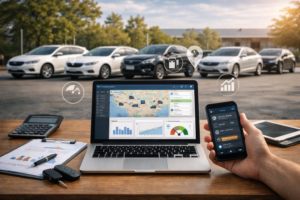
Custom automotive fleet management software helps businesses save time and reduce operational costs by automating vehicle tracking, route planning, maintenance scheduling, and driver management. Unlike generic off-the-shelf tools, custom solutions are built around a company’s specific fleet size, workflows, and business goals. This allows organizations to improve efficiency, lower fuel expenses, prevent costly breakdowns, and streamline daily operations.
For logistics, delivery, and transportation companies, investing in tailored fleet management software can lead to better productivity, smarter decision-making, and significant long-term savings. At Developers Troop, we’ve worked with many business owners who felt like they were drowning in spreadsheets and manual logs. They knew there was a better way to operate, but they weren’t sure if a generic software package could truly handle their unique needs.
We believe that software should work for you, not the other way around. Automotive fleet management software has evolved from simple GPS tracking into a sophisticated hub of data and automation. However, the real magic happens when that software is built specifically for your workflows.
By moving away from “one-size-fits-all” tools and toward custom solutions, you can gain a level of control and insight that saves your team hours of frustration and thousands of dollars in hidden costs. In this guide, we’ll explore how custom fleet technology can transform your operations and boost your bottom line.
What Is Automotive Fleet Management Software and How Does It Work?
Fleet management software is a digital platform designed to help businesses coordinate and optimize their vehicles, drivers, and logistical tasks. Think of it as the “brain” of your transportation department. It collects data from various sources to provide a bird’s-eye view of everything happening on the road and in the garage.
Core Functions of Fleet Management Systems
The primary goal of these systems is to centralize information. Instead of having maintenance records in a filing cabinet and fuel receipts in a shoebox, everything is digitized. The software tracks vehicle health, monitors driver hours, and ensures that you stay compliant with industry regulations like ELD (Electronic Logging Device) mandates.
Key Components: GPS Tracking, Telematics, and Data Analytics
To work effectively, the software relies on three main pillars. GPS Tracking tells you exactly where your assets are at any given moment. Telematics goes deeper, pulling data directly from the vehicle’s engine, such as speed, fuel consumption, and engine fault codes. Finally, Data Analytics turns that raw information into actionable reports, showing you exactly where you are losing money or where your team is excelling.
How Fleet Software Improves Vehicle Monitoring and Operations
By connecting every vehicle to a central dashboard, you eliminate the guesswork. We have seen managers who used to spend all morning on the phone trying to locate drivers; now, they simply look at a screen. This real-time visibility allows for faster decision-making and much more reliable service for your customers.
Industries That Benefit Most From Fleet Management Software
While logistics is the most obvious candidate, we see a massive impact in many other areas. Construction companies use it to track heavy equipment. Field service businesses, like HVAC or plumbing firms, use it to dispatch technicians more efficiently. Even municipalities use fleet software to manage police cars, fire trucks, and waste management vehicles.
Custom Fleet Management Software vs Off-the-Shelf Solutions
When you start looking for a solution, you will find plenty of “off-the-shelf” products that you can subscribe to for a monthly fee. While these can be a good starting point for very small teams, they often become a bottleneck as your business grows.
What Are Off-the-Shelf Fleet Management Systems?
These are pre-built, mass-market applications like Samsara or Geotab. They are designed to be “good enough” for thousands of different companies. They offer a standard set of features that cover the basics of tracking and compliance.
What Is Custom Fleet Management Software?
Custom software is built from scratch or on a flexible framework specifically for your company. At Developers Troop, we build these solutions to mirror your existing business processes. If you have a unique way of calculating driver bonuses or a specific type of specialized equipment that generic tools don’t recognize, custom software is the answer.
Key Differences in Cost, Flexibility, and Scalability
Off-the-shelf software has a lower entry cost but often charges “per vehicle” fees that get expensive quickly. Custom software requires a higher upfront investment but has no recurring licensing fees per vehicle. In terms of flexibility, custom wins every time. You aren’t waiting for a vendor to add a feature you need; you own the roadmap.
When Businesses Should Choose Custom Software
If you find that your team is using three different apps to manage the fleet, or if you are constantly exporting data to Excel to run your own calculations, it is time for a custom solution. Custom software makes sense when your fleet operations are a core part of your competitive advantage and you need a tool that fits your specific “secret sauce.”
How Custom Automotive Fleet Software Saves Time?
Time is the most valuable asset in any fleet-based business. Custom software focuses on removing the manual, repetitive tasks that slow your team down.
Automating Vehicle Tracking and Route Optimization
Instead of dispatchers manually drawing routes on a map, our custom software solutions use advanced algorithms to find the most efficient path. They account for traffic patterns, vehicle size, and delivery windows. We have seen this reduce planning time from hours to just a few minutes every morning.
Real-Time Fleet Monitoring and Alerts
You shouldn’t have to go looking for problems. Custom software can be programmed to “push” alerts to you only when something goes wrong. If a driver goes off-route, or if an engine light comes on, you get a notification immediately. This proactive approach prevents small issues from turning into day-long delays.
Streamlining Driver Management and Scheduling
Managing schedules can be a logistical nightmare, especially with varying shift times and vacation requests. Custom tools can automate the scheduling process, ensuring that the right driver is assigned to the right vehicle based on their qualifications and available hours.
Automated Maintenance Scheduling and Service Reminders
Forget about “gut feelings” for when a van needs an oil change. The software tracks every mile driven and every engine hour. It automatically schedules service appointments and notifies your mechanics. This keeps your vehicles on the road longer and prevents the chaos of unexpected breakdowns.
How Custom Fleet Management Software Reduces Operational Costs?
Reducing the “Cost Per Mile” is the holy grail of fleet management. Custom software provides the granular data you need to shave pennies off every mile, which adds up to thousands of dollars by the end of the year.
Lower Fuel Costs Through Smart Route Optimization
Fuel is often a fleet’s biggest expense. By reducing idle time and ensuring drivers take the shortest, most efficient routes, we consistently see fuel savings of 10% to 15%. Custom software can also track fuel card usage to flag any unauthorized purchases or “skimming” at the pump.
Preventing Expensive Breakdowns With Predictive Maintenance
A vehicle that breaks down on the highway is much more expensive than one that gets serviced in your shop on a Tuesday afternoon. By using predictive analytics, the software can spot patterns – like a battery that is starting to lose its charge – before it fails. This shifts your maintenance from “reactive” to “preventive,” saving you from massive repair bills and towing fees.
Reducing Administrative Work and Manual Data Entry
We often find that administrative staff spend 20% of their time just typing data from paper logs into a computer. Custom software eliminates this by capturing data directly from the vehicles and mobile apps. This allows your office team to focus on growing the business instead of just keeping up with paperwork.
Improving Driver Behavior to Cut Insurance and Accident Costs
Harsh braking, rapid acceleration, and speeding are all signs of risky driving that lead to accidents and high insurance premiums. Custom dashboards can score drivers on their safety performance. When drivers know they are being monitored, their behavior improves, which can lead to significant discounts on your commercial insurance rates.
Key Features to Look for in Custom Fleet Management Software
If you’re planning a custom build, you want to make sure the foundation is solid. Here are the “non-negotiable” features we recommend:
1. Real-Time GPS Fleet Tracking
This goes beyond just seeing a dot on a map. You need a breadcrumb trail of where the vehicle has been, how long it stopped at each location, and its current heading and speed.
2. Route Planning and Dispatch Optimization
The ability to re-route drivers in real-time based on new orders or traffic accidents is a game-changer for customer satisfaction.
3. Fuel Usage Monitoring and Cost Analysis
Integration with fuel cards and engine sensors allows you to see exactly how much fuel is being used versus how much is being bought.
4. Vehicle Maintenance and Asset Management
A digital folder for every vehicle that stores its entire history, from purchase price and depreciation to every single nut and bolt that has been replaced.
5. Driver Behavior Monitoring and Safety Tracking
Dashcam integration and telematics data that help you identify your best drivers and those who need more training.
6. Data Analytics and Reporting Dashboards
You don’t need more data; you need better answers. A custom dashboard should show you your most important “KPIs” (Key Performance Indicators) at a single glance.
Benefits of Custom Fleet Management Software for Different Industries
Custom software is particularly effective because it can be tuned to the specific “pain points” of different sectors.
Logistics and Transportation Companies
For these firms, the focus is on load optimization and cross-border compliance. Custom software can handle complex international tax filings (like IFTA) automatically.
Delivery and Courier Businesses
Speed and “Proof of Delivery” (POD) are king here. Custom apps can include digital signature capture and photo verification to ensure that every package is accounted for.
Construction and Field Service Companies
These businesses often leave equipment at job sites for weeks. Custom software can set up “geofences” that alert you if a piece of expensive machinery is moved after hours, providing a massive boost to theft prevention.
Car Rental and Automotive Service Businesses
Managing the “turnaround” of vehicles is essential. Custom tools can track cleaning schedules, fuel levels at return, and damage reports to ensure that every vehicle is ready for the next customer as quickly as possible.
Integration Capabilities of Custom Fleet Management Software
One of the biggest advantages of custom development is that your fleet software won’t live on an island. It will be part of your entire tech ecosystem.
Integration With ERP and Business Management Systems
We can connect your fleet data directly to your Enterprise Resource Planning (ERP) software. This means when a delivery is completed, your inventory levels are updated, and your warehouse knows to prep the next load immediately.
Connecting Fleet Software With Accounting Platforms
Imagine if your fuel expenses and maintenance bills were automatically sent to QuickBooks or Xero. This level of integration removes the risk of human error and ensures your financial reports are always up to date.
Integration With GPS, Telematics, and IoT Devices
Custom solutions can pull data from almost any hardware. Whether you use specialized temperature sensors for “cold chain” logistics or specialized weight sensors for trucking, we can bring all that data into one view.
API Connectivity for Third-Party Tools
A well-built custom system uses APIs to “talk” to other tools. This allows you to easily add new functionality in the future, like weather forecasting tools or third-party logistics (3PL) platforms.
How to Choose the Right Custom Fleet Software Development Partner?
Building custom software is a partnership. You need a team that understands both the code and the “grease and gears” of the automotive world.
1. Evaluating Industry Experience in Automotive Software
Look for a partner who has built similar tools before. They should understand the nuances of telematics data and the specific challenges of managing mobile workforces.
2. Assessing Technical Expertise and Development Approach
At Developers Troop, we use an “agile” development process. This means we build the software in small, manageable pieces, allowing you to see progress and provide feedback every step of the way.
3. Importance of Scalable and Secure Software Architecture
Your software needs to be able to handle ten vehicles today and a thousand vehicles five years from now. It also needs to be incredibly secure, as your fleet data is a high-value target for competitors or bad actors.
4. Questions to Ask Before Hiring a Fleet Software Development Company
- “How do you handle data security and driver privacy?”
- “Can your software integrate with our specific GPS hardware?”
- “What is your plan for long-term maintenance and updates?”
- “Do you provide training for our drivers and office staff?”
Cost of Developing Custom Fleet Management Software
We believe in being upfront about the numbers. While custom software is an investment, the long-term savings often make it the most cost-effective choice.
Factors That Affect Development Costs
The price depends on the complexity of your features, the number of integrations required, and whether you need a companion mobile app for your drivers.
Typical Price Range for Custom Fleet Software Development
Small, specialized fleet tools can start in the $30,000 to $50,000 range. For large, enterprise-grade systems with complex AI-driven optimization, the investment can exceed $150,000.
Long-Term ROI Compared to Subscription-Based Software
If you have a fleet of 50 vehicles, you might be paying $2,000 a month in subscription fees for a generic tool. That is $120,000 over five years – and you don’t own the software. With a custom solution, you pay for the build once, and your ongoing costs drop significantly, often paying for the entire project within the first two years.
How Custom Solutions Reduce Total Cost of Ownership
By owning the asset, you avoid “vendor lock-in.” You aren’t subject to sudden price hikes or forced upgrades. You have total control over your technology budget.
Real-World Examples of Businesses Saving Money With Fleet Software
Data from the American Transportation Research Institute (ATRI) consistently shows that technology-forward fleets are more profitable.
1. Reducing Fuel Costs Through Route Optimization
We’ve seen businesses reduce their total mileage by 8% just by fixing inefficient routes. For a fleet that spends $500,000 a year on fuel, that is a $40,000 “raise” for the company.
2. Improving Fleet Utilization and Productivity
Often, businesses think they need to buy more trucks when the real problem is that their current trucks are sitting idle for too long. Software helps you see these gaps, allowing you to do more work with fewer vehicles.
3. Lowering Maintenance Costs With Predictive Analytics
One of our clients was able to reduce “emergency repair” costs by 30% by catching issues while the vehicles were still in the shop for routine inspections.
4. Increasing Operational Efficiency With Automation
By automating the billing and dispatch process, another partner was able to grow their fleet by 25% without hiring any additional office staff.
Future Trends in Automotive Fleet Management Technology
The world of fleet management is moving fast, and staying ahead means keeping an eye on the horizon. We are currently seeing a massive shift toward Artificial Intelligence and Machine Learning, which allow systems to predict traffic patterns or suggest the exact moment to sell a vehicle for peak resale value. This pairs perfectly with the Internet of Things (IoT), where everything from tire pressure sensors to cargo temperature monitors sends data directly to your dashboard. These connected vehicles make “predictive maintenance” a reality, helping you swap out a failing part before it leads to an expensive roadside breakdown.
As we look further into 2026 and beyond, the transition to Electric Vehicles (EVs) is becoming a central focus for custom software. Managing an EV fleet requires entirely new data points, such as charging station proximity, battery health monitoring, and specialized route planning to account for range. By integrating these future-proof technologies now, you aren’t just managing a fleet; you are building a smart, resilient network. Embracing these shifts ensures your business remains competitive and efficient as the automotive industry continues to evolve.
Common Mistakes Businesses Make When Implementing Fleet Software
- Choosing Software That Lacks Scalability: Buying a “cheap” tool that breaks as soon as you add your 10th vehicle.
- Ignoring Integration With Existing Systems: Having a “silo” of data that doesn’t talk to your accounting or sales teams.
- Poor Data Utilization and Reporting: Collecting a mountain of data but never actually looking at it to make decisions.
- Underestimating Driver Training and Adoption: If your drivers hate the app, they will find ways to bypass it. Custom software allows you to build an interface that drivers actually like using.
Final Verdict: Is Custom Fleet Management Software Worth the Investment?
The short answer is yes – if your fleet is a critical part of your business. The upfront cost of custom development is an investment in your company’s independence and efficiency. It allows you to stop paying “rent” on generic software and start building a digital asset that grows with you.
Think of it like buying vs. renting a warehouse. Renting is easier today, but buying gives you stability and long-term wealth. Custom software is the “buying” option for your tech stack. When the software fits your business perfectly, the friction disappears. Your team works faster, your vehicles last longer, and your customers get better service.
Ready to stop fighting with generic tools and start optimizing your fleet with a custom solution? At Developers Troop, we help companies build powerful, tailored fleet management software that saves time and puts money back in your pocket. Feel free to contact us anytime – our expert team will walk through your current operations and identify where a custom build could provide the biggest win for your business.