


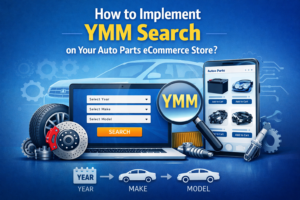
To implement YMM search on an auto parts eCommerce store, you must map your product SKUs to a standardized vehicle database (ACES/PIES). This is achieved by either installing a YMM search plugin for platforms like Shopify or WooCommerce, or by developing a custom database architecture that allows users to filter results by Year, Make, and Model.
At Developers Troop, being auto parts retailers, we aren’t just selling metal and rubber; we are selling the assurance that a car will get back on the road. The Year/Make/Model (YMM) search is the high-performance engine under the hood of your website that makes this possible. It takes the guesswork out of the shopping experience, turning a daunting catalog of millions of SKUs into a curated, fail-safe selection for the driver.
Whether you’re catering to a weekend warrior with a Toyota Camry or a performance enthusiast tuning a BMW 3 Series, a seamless YMM integration is your most powerful tool for reducing returns and building a loyal community of DIYers. Let’s dive into how you can build this essential feature from the ground up.
Why YMM Search Is Essential for Auto Parts eCommerce
The automotive industry is unique because of the sheer volume of data involved. A single car model can have hundreds of different variations based on the trim level, engine size, or even the month it was manufactured.
We know that a cluttered site kills conversions. In 2026, customers expect to find exactly what they need in seconds. If you ask a customer to search by a part number they do not know, you’re creating a barrier to the sale.
By implementing YMM search, you remove that barrier. You’re telling the customer: “Tell us what you drive, and we will show you only what works.” This level of service builds instant credibility and trust. It transforms your website from a generic catalog into a specialized tool tailored to the needs of the driver.
What Is Year/Make/Model (YMM) Search and How Does It Work?
At its core, YMM search is a filtering system that allows users to select their vehicle’s year, make, and model from a series of dropdown menus. Once selected, the website hides all irrelevant products and only displays items that are verified to fit that specific vehicle.
How YMM Filters Match Vehicle Data with Products
This is not just a simple search bar. It relies on a “fitment database” where every product in your inventory is mapped to a list of compatible vehicles. When a user selects a “2022 Ford F-150,” the system queries your database for all Product IDs associated with that vehicle string.
Examples of YMM Search in Action
Think of the major players like AutoZone or RockAuto. Their homepages are dominated by vehicle selectors. Whether a customer is looking for Brembo brake pads for a Chevrolet Corvette or a simple air filter for a Toyota Corolla, the journey always starts with the vehicle.
Benefits of Implementing YMM Search on Your Auto Parts Store
YMM search acts as a digital personal assistant, clearing away the noise. It allows customers to navigate a catalog of 100,000 SKUs as easily as if there were only ten.
Higher Conversion Rates and Sales
The numbers speak for themselves. In early 2026, statistics show that the average conversion rate for the Auto Parts and Accessories subcategory can reach as high as 25% when accurate fitment is provided. This is significantly higher than general retail because automotive shoppers usually have a specific, urgent need.
Reduced Returns Due to Accurate Fitment
Returns are the silent killer of eCommerce profits. Shipping a heavy alternator back and forth is expensive. By ensuring the part fits before the customer clicks “buy”, you can reduce return rates from an industry average of 15% down to nearly zero.
Better SEO with Vehicle-Specific Pages
When you implement YMM search correctly, you create a dedicated URL for every vehicle combination. These pages are gold for SEO because they target “long-tail” keywords that high-intent buyers are actually typing into Google.
Enhanced Customer Trust and Experience
When a customer sees that you have verified fitment for their specific car, they feel safe. This professional touch improves your experience, expertise, authoritativeness, and trustworthiness and keeps people coming back to your “garage” for future needs.
Key Requirements Before Implementing YMM Search
Structuring Your Product Catalog with Fitment Data
You cannot build a house on a weak foundation. Your product data must be organized. This means every SKU needs a clean title, description, and a list of compatible vehicles.
Organizing Vehicle Database (Year, Make, Model, Trim)
You need a “master” list of vehicles. In the US, this is usually based on the VCdb (Vehicle Configuration Database). In 2026, the industry has moved to ACES 5.0 and PIES 8.0 standards, which offer even more precision, including support for electric vehicles and complex sensor configurations.
Choosing the Right Platform (Shopify, WooCommerce, Custom)
Different platforms handle large datasets differently:
- Shopify: Great for ease of use but requires apps for complex fitment logic.
- WooCommerce: Highly flexible but can get slow with massive catalogs without a refined database structure.
- Custom: The gold standard for performance and scalability.
Understanding Data Accuracy and Maintenance
The car market changes every year. New models are released, and old fitment data is refined. Your system must be able to handle regular updates to stay accurate.
Methods to Implement YMM Search on Your Website
Using YMM Search Plugins or Apps
For many small to mid-sized stores, a plugin is the fastest way to get started. These are pre-built tools that you can install to add filtering functionality.
Popular YMM Plugins for Shopify and WooCommerce
On Shopify, apps like “EasySearch” or “HulkApps” are common choices. For WooCommerce, “Prowess” or specialized “Product Filters” are often used. These tools provide a quick UI, but they sometimes struggle with very large databases.
Pros and Cons of Plugin-Based Solutions
The main advantage is speed to market. You can have a filter up in a few days. The downside is that you are limited to the plugin’s features. If you need a unique way to display tire sizes or wheel offsets, a basic plugin might fail you.
Building a Custom YMM Search System
If you’re serious about growth, a custom solution is often the better path.
Advantages of Custom Development
With a custom system, we build the architecture specifically for your inventory. There are no unnecessary features slowing you down. You own the code, and you can integrate it deeply with your inventory management or ERP systems.
Scalability and Performance Benefits
Custom systems can handle millions of fitment rows without breaking a sweat. In 2026, customers expect page loads in under two seconds. Custom development ensures you hit that mark.
When Custom Solutions Are the Better Choice
If you have more than 10,000 SKUs or you’re selling complex parts like wheels and tires, a plugin might not be enough. This is when you need a specialized partner to build a robust system.
Step-by-Step Guide to Implement YMM Search
Step 1: Collect and Structure Vehicle Fitment Data
Start by gathering your data. You can get this from manufacturers or third-party providers like SEMA Data. Ensure your data follows the latest ACES standards.
Step 2: Map Products to Compatible Vehicles
This is the mapping phase. Each product must be linked to its corresponding vehicle IDs. This is often done via a CSV upload or a direct API connection to a data provider.
Step 3: Choose Your Implementation Method
Decide if you are going the plugin route or building a custom engine. If you are on a budget, look for a basic setup, but remember that scalability matters.
Step 4: Design the YMM Search Interface
The UI should be prominent. Place the dropdowns at the top of your homepage and category pages. Make sure the labels are clear: Year, then Make, then Model.
Step 5: Integrate YMM with Your Product Pages
Once a vehicle is selected, every product page should display a “Fitment Verification” badge. For example: “This part fits your 2019 Nissan Altima.”
Step 6: Test Compatibility and Accuracy
Run sanity checks. Search for parts for a car you know well and make sure the results are correct. Check for edge cases, like vehicles that changed mid-year.
Step 7: Optimize for SEO and Performance
Ensure your YMM results pages are crawlable. Use “canonical” tags to prevent duplicate content issues while still allowing Google to index your vehicle-specific landing pages.
Designing a User-Friendly YMM Search Interface
Dropdown vs Smart Search UI
Dropdowns are traditional and reliable. However, “Smart Search” (where a user types “2015 F150 brake pads”) is becoming more popular. A hybrid approach is often best for 2026.
Mobile Optimization Best Practices
Over 75% of automotive eCommerce traffic now comes from mobile devices. Your YMM dropdowns must be large enough for fingers to tap and must load instantly even on a 5G connection.
Adding “My Garage” or Saved Vehicles Feature
Allow customers to save their vehicles. If we know you drive a Jeep Wrangler and a Honda Odyssey, we can show you relevant deals for both cars every time you log in.
Improving UX with Fast Loading and Autocomplete
Use AJAX or similar technologies so that the “Model” dropdown updates instantly after the “Make” is chosen. There should be zero lag between selections.
SEO Optimization for YMM Search Pages
Creating Vehicle-Specific Landing Pages
Do not just filter the current page. Create a permanent URL like yoursite.com/honda/civic/2022. This allows you to rank for terms like “2022 Honda Civic parts.”
Optimizing URLs for YMM Keywords
Avoid messy URLs with too many parameters. Keep them clean and human-readable. Google loves structure, and so do your customers.
Using Schema Markup for Automotive Products
Use Product and Vehicle schema. This tells search engines exactly what you are selling and what it fits, which can lead to “rich snippets” in search results.
Targeting Long-Tail Keywords (Year + Make + Model)
Most of your traffic will come from specific searches. “Brake pads” is too competitive. “2018 Dodge Ram 1500 front brake pads” is a term you can actually win.
Internal Linking Strategy for YMM Pages
Link from your blog posts and category descriptions to your vehicle-specific pages. This spreads “link equity” across your site and helps Google understand your topical authority.
Common Challenges and How to Overcome Them
Managing Large Vehicle Databases
The sheer volume of data can be overwhelming. We recommend using an API-based approach where your site pulls only the data it needs in real-time. This prevents your site from becoming heavy and slow.
Ensuring Data Accuracy and Updates
Data can go stale. Set up a monthly audit or use a service that automatically syncs with the latest ACES/PIES updates to keep your fitment current. Accuracy is your biggest trust signal.
Performance Issues with Large Catalogs
If your search takes 10 seconds, your conversion rate will plummet. Use server-side caching and optimized database queries to keep things snappy.
Integration with Existing Systems
Your YMM tool needs to talk to your inventory system. If you sell the last radiator for a 2015 Camry, the search results should update immediately to show “Out of Stock.”
Plugin vs Custom YMM Search: Which Is Better?
Cost Comparison
A plugin might cost you $50 a month. A custom build might cost several thousand upfront. However, the custom build pays for itself by eliminating monthly fees and providing a better user experience that drives higher sales.
Performance and Scalability
Plugins often add “bloat” code to your site. A custom solution is built for speed. If you plan to grow your inventory to 50,000+ parts, custom is the only viable choice.
Customization Flexibility
Want to add a “Search by VIN” feature? A plugin usually cannot do that. A custom solution can be expanded to include any feature you can imagine.
Long-Term ROI
The long-term ROI of a custom system is almost always higher. You get better SEO, higher conversion rates, and a more professional brand image that attracts high-value customers.
How Developers Troop Can Help You Implement YMM Search
Custom YMM Search Development for Auto Parts Stores
At Developers Troop, we do not just “install a plugin.” We build bespoke search architectures that act as the engine of your business. We understand the nuances of the automotive industry and the technical requirements of modern SEO.
Seamless Integration with eCommerce Platforms
Whether you’re on Shopify, BigCommerce, or a headless setup, we can integrate a system that feels native to your brand. Our goal is to make the technology invisible so the shopping experience is effortless.
SEO-Optimized and High-Performance Solutions
Our builds are designed for speed. We ensure that your site stays fast, your SEO rankings stay high, and your customers stay happy. If you want to dive deeper into how we approach these projects, check out our work on YMM (Year/Make/Model) search for autoparts, wheels, and tires.
Scalable Systems Built for Growth
We build for the future. As you add new car brands like Rivian or Lucid to your catalog, our systems scale with you. You will never have to rebuild your search engine from scratch.
Cost of Implementing YMM Search
Plugin Costs vs Custom Development
While plugins have a lower entry price, custom development is a one-time capital investment that provides long-term stability. A professional custom implementation typically starts in the range of $3,000 to $7,000 depending on the complexity of your data.
Data Management Costs
Do not forget the cost of the data itself. Subscriptions to data co-ops like SEMA Data or Opticat can range from $100 to $1,000 per month. This is an essential cost of doing business in the parts world.
Maintenance and Updates
Budget for quarterly updates. New car models are released every year, and you need to ensure your “2027” dropdown is ready when the first new models hit the dealerships.
ROI and Business Impact
Most of our clients see an increase in conversion rates of 15% to 30% after implementing a professional YMM search. For a store doing $50,000 a month in sales, that is an extra $7,500 to $15,000 in monthly revenue.
Future Trends in YMM Search Technology
AI and Predictive Fitment Matching
In the near future, AI will predict what you need based on your car’s mileage or typical wear-and-tear patterns for that model. “We noticed your F-150 has 60,000 miles. Would you like to see compatible spark plugs?”
Voice Search for Auto Parts
“Find me a starter motor for a 2012 Chevy Silverado.” As voice search grows, your backend YMM data structure will be what allows AI assistants to answer these queries accurately.
Integration with Connected Vehicles
Imagine your car sending a signal to your store when a part is about to fail. We are moving toward a world where your eCommerce site is directly connected to the vehicle’s onboard computer.
Conclusion: Implementing YMM Search for Long-Term Growth
YMM search is the most important feature of any auto parts store. It reduces returns, boosts conversions, and improves SEO. Without it, you are asking your customers to do too much work.
In 2026, you are competing with giants like Amazon and eBay. To win, you must offer a better, more specialized experience. Fitment assurance is how you win.
Start by auditing your current data. If you’re just starting, a plugin might be the way to go. But if you are ready to scale, consider a custom solution that can grow with you. Ready to transform your auto parts store? Contact Developers Troop today and let’s build the perfect search tool for your business.
Frequently Asked Questions (FAQs)
1. What is YMM search in auto parts websites?
It stands for Year, Make, Model. It is a filtering tool that lets customers find parts that are guaranteed to fit their specific vehicle.
2. How do I add a YMM filter to my eCommerce store?
You can use a dedicated app (like EasySearch for Shopify) or hire a developer to build a custom integration using ACES and PIES data standards.
3. Is YMM search necessary for small auto parts stores?
Yes. Even with a small catalog, providing fitment assurance reduces customer anxiety and prevents costly returns.
4. How much does YMM search implementation cost?
It varies wildly. Simple plugins start at $20/month, while custom enterprise solutions can range from $5,000 to $20,000+ depending on the amount of data and platform complexity.
5. Can YMM search improve SEO rankings?
Absolutely. It allows you to target highly specific “long-tail” keywords that have high conversion intent and lower competition. It also improves your site’s bounce rate, which is a positive signal to Google.